Photo Gallery
Photos of a few cases
Coronary Band Injuries and Hoof Deformities
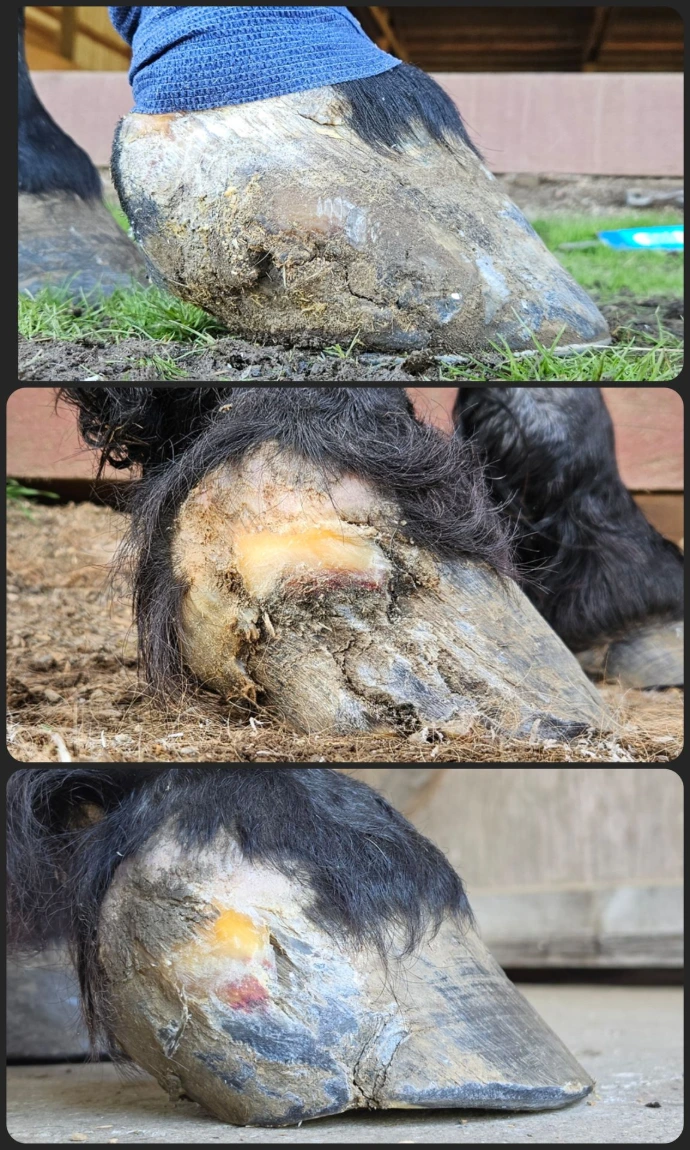
Coronary band injuries can occur for a number of reasons; this gelding got his leg caught in a barbed wire fence as a two-year-old and was four going on five when he came to my books. The top photo is how his foot looked when I met him. In this photo, his hoof had a hang nail type growth from the hairline, and it had been glued with acrylic and then shod. After a few months, I was able to find the cranial and caudal crack on either side of the deformity and remove the excess material. Soon, I found capillaries at the distal end of that deformity and kept it at bay. Slowly, the crack grew out and the deformity has been kept at bay to reduce the risk of catching it on the environment like a dew claw, and the blood supply to that area slowly recessed proximally. This was done 100% barefoot. The owner chose to keep the foot wrapped with duct tape and vet wrap for the first couple months to prevent excess fungus or bacteria from entering any of the cracks or crevices.
Glue-On Shoes
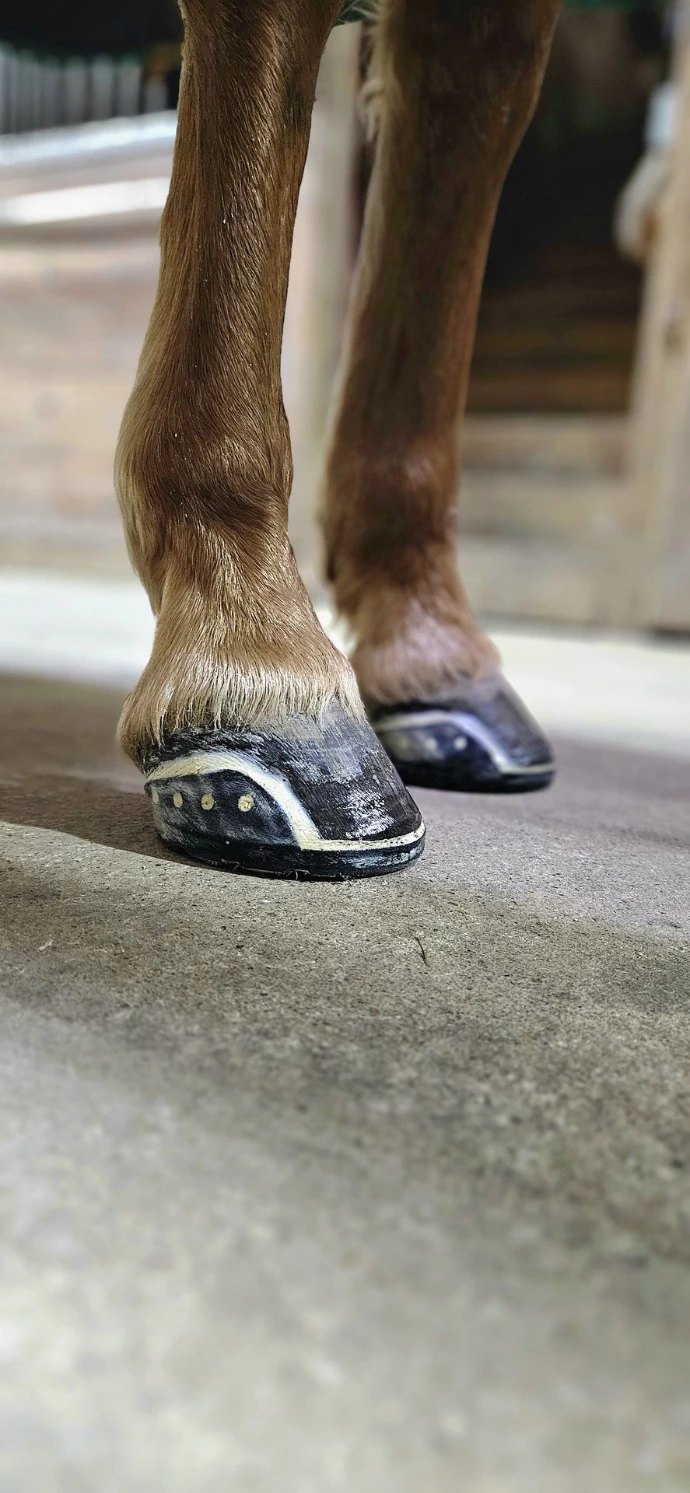
Glue-on shoes are finally out in the world and being recognized, but many are scared off by the pricing. I can't disagree that they're more expensive than traditional shoes, but I haven't seen any of the feet on my schedule decline after an application. I currently offer a handful of shoes from EasyCare, as I've found they have the biggest variety and they are the simplest to apply for the horse and myself. I have done a handful of these applications for a rodeo drill and flag team, and no one lost a shoe even in some questionable arenas and rugged terrain. These shoes offer protection, concussion absorption, and support without disabling the hoof's desire to flex and deform through movement.
Limb Rebalancing
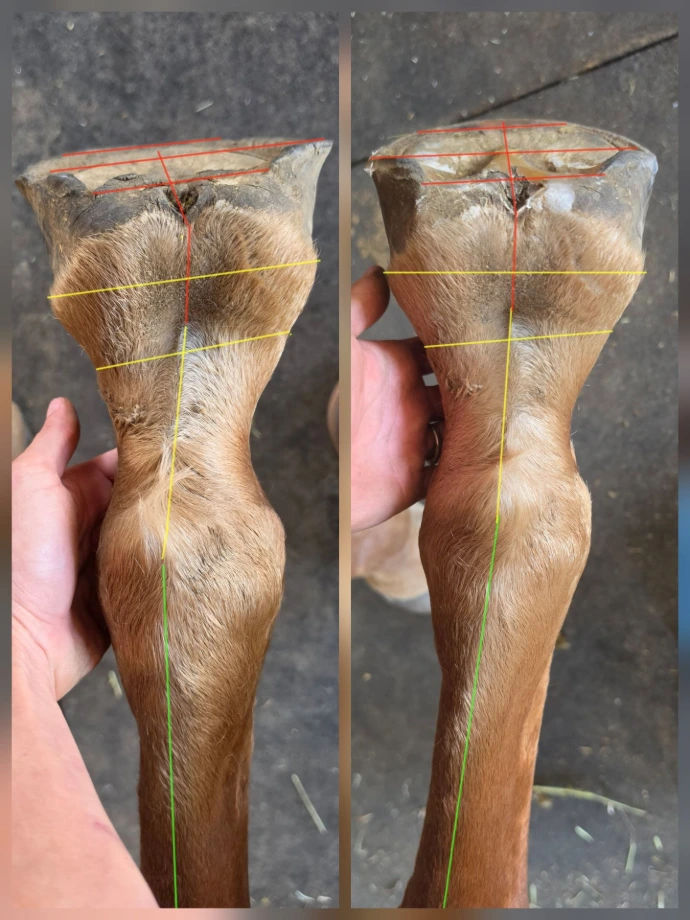
It's pretty amazing what can be accomplished in one trim. This photo for example, is a before and after of the same session. This was my first trim on this young stock horse, who clearly has some balance concerns in her hoof and limb. With cases like these, my barefoot trims offered on four week cycles can straighten out limbs all on their own. However, in a perfect world I do prefer to get a well-educated bodyworker on board to help relax the body into a more balanced place on top of the newly balanced feet. Otherwise, what tends to happen is I will get the feet and limbs as balanced as I can, and then hit a plateau because the soft tissue in the body is still holding onto the same patterns it had when the limbs and feet were crooked.
Barefoot Trims
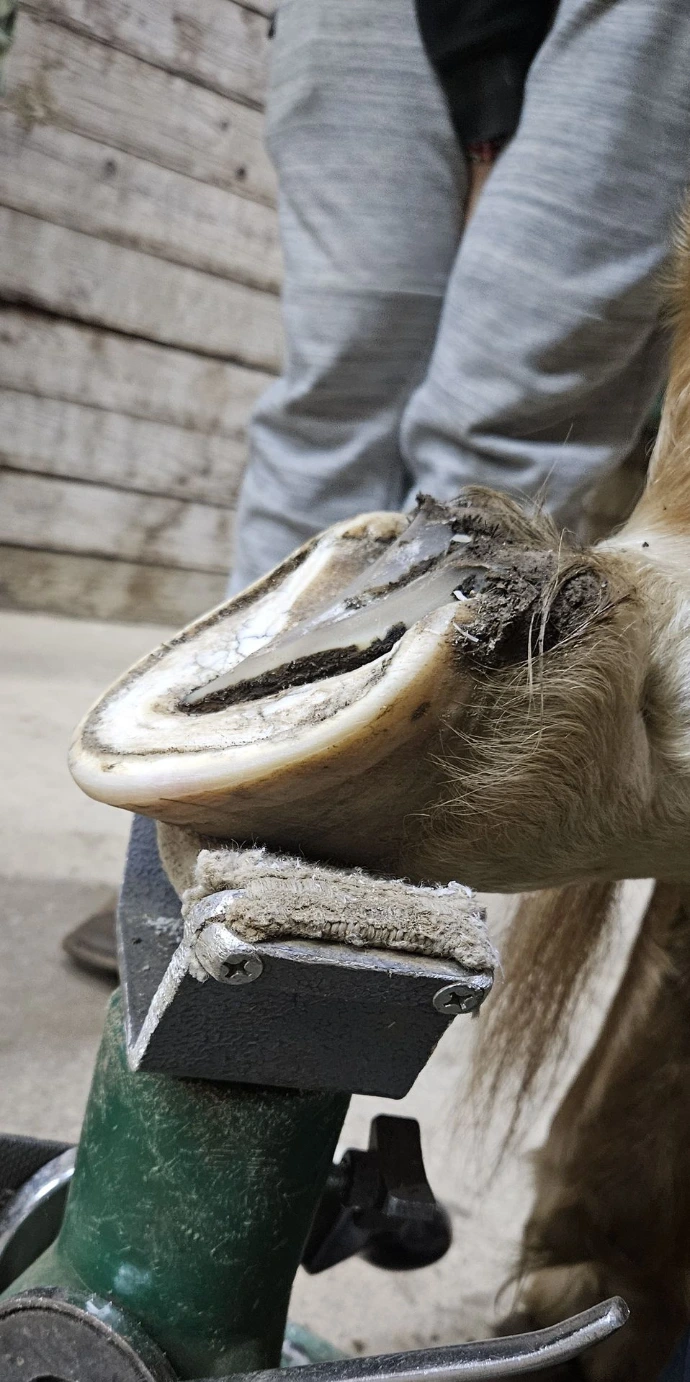
My standard barefoot trims are offered on four week cycles to promote growth and development, while limiting the hoof's ability to deform and distort in undesirable ways. Every foot is unique, which means the trim should be unique to every foot. That said, my trims don't fit into a mold, and they aren't copy pasted from any specific trim method. My trims focus on caudal development, while maintaining the integrity and structure of the capsule. In a healthy hoof, my trims allow the natural shape of the hoof which will look very similar to the photo here; soft curvature in the quarters, soft rounded heels, a full healthy frog without a sulcus crack or thrush, and a bevel all the way around the foot.
Low Heels
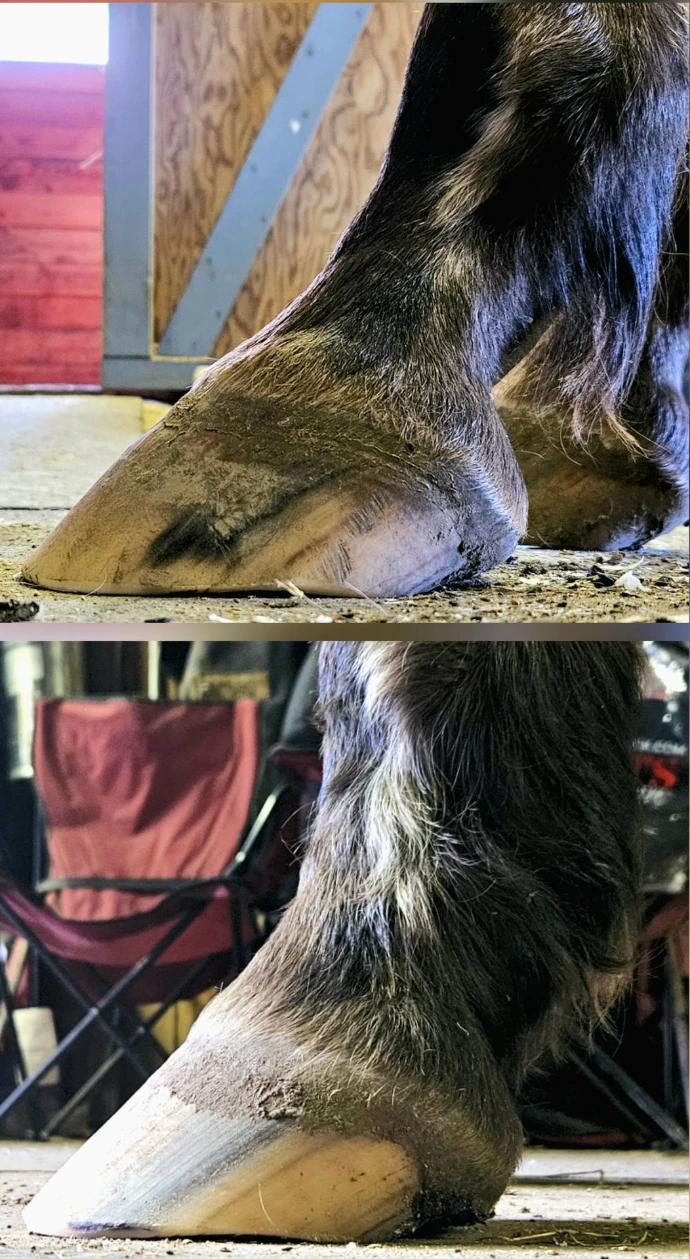
Low heels have been the largest struggle I've seen in barefoot horses since I've began my career. I have found that standard flat trims will run the hoof forward, which creates a long toe, flat feet, and thin soles. Clients tend to find me after the toes have been shortened excessively, and the heels were left alone and the horse has become tender and sore. The horse in this photo had been receiving flat trims, with excessive wall dressing. By rasping the outer wall thin, it removes the waterproofing layer and compromises the walls. This allows an opportunity for chipping, cracking, distortion, and seedy toe. It also robs the coronary corium of stimulation, which doesn't promote healthy growth. On this horse, I didn't rasp the exterior of the hoof wall at all, I brought the heels back as far as I could and shaped the foot and everything grew out. These are absolutely cases that I suggest getting a skilled bodyworker on board to remove the body's restrictions that were set in place during the old movement pattern of low heels and long toes.
Barefoot Transitions
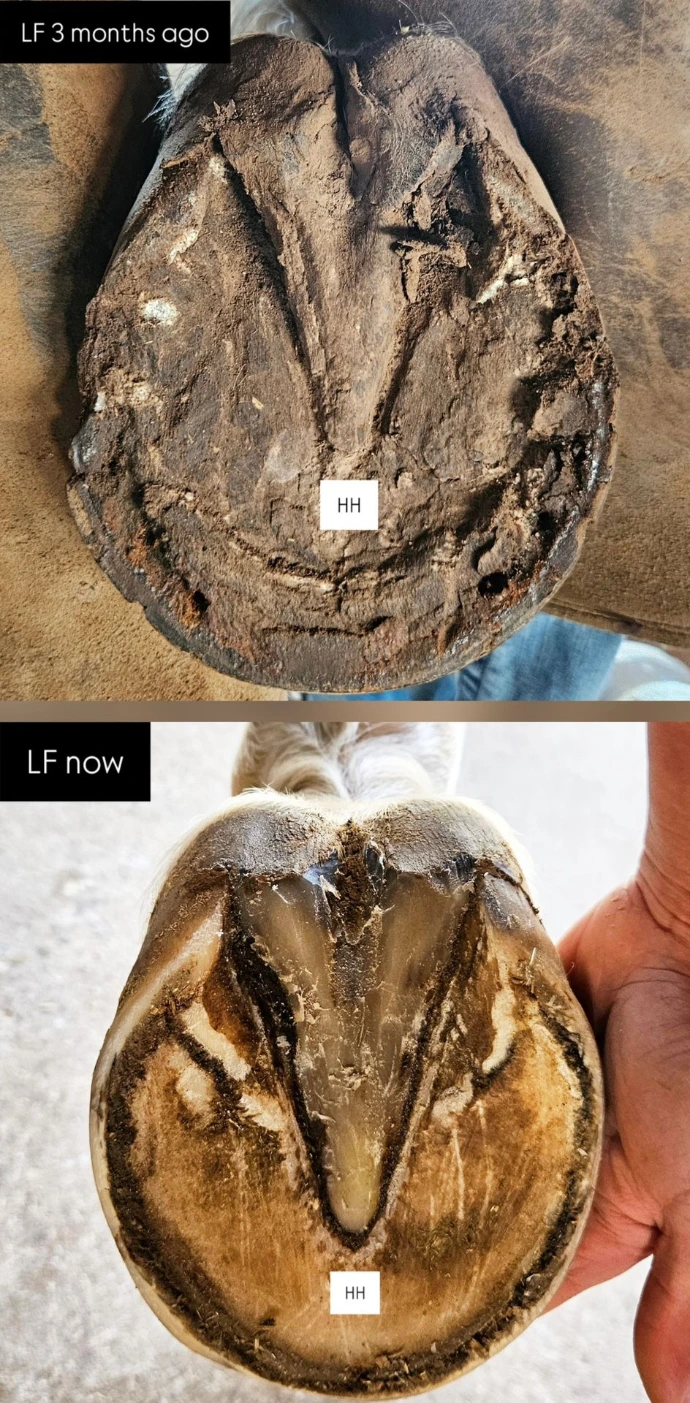
In the last few years, I've started seeing a destructive pattern in the hoof care industry. Barefoot horses don't receive trims that promote growth and development so the horse get tender, they get shoes put on, the frogs prolapse, the heels collapse, the toes and heels run forward, so the toes get cut back farther, the heels run forward farther, the frogs develop deep sulcus cracks with intense infection, and white line disease is rampant under the shoes. Then, the shoes come off and the horse can't walk, so they get special shoes with pads, wedges, pour-in, or DIM, and they never come out of them. The horse is never truly sound, but "they have to have to be shod" or they can't walk. The horse is forever labeled as a horse that can never be barefoot. That's when clients tend to find me. They've exhausted every option provided by their vet and/or farrier, so they are going to give me a try to see what happens. The photo here is what happens. We bring the heels back over time, we trim every four weeks, and we offer support in non-traditional ways until the horse can be comfortable and sound barefoot. I have watched shod horses go barefoot with traditional flat trims, and they most certainly cannot be barefoot in that sense. Transitioning horses out of shoes is a rehabilitation process, and takes an incredible amount of care and consideration from both the HCP and the horse's guardian.
Run Forward Heels
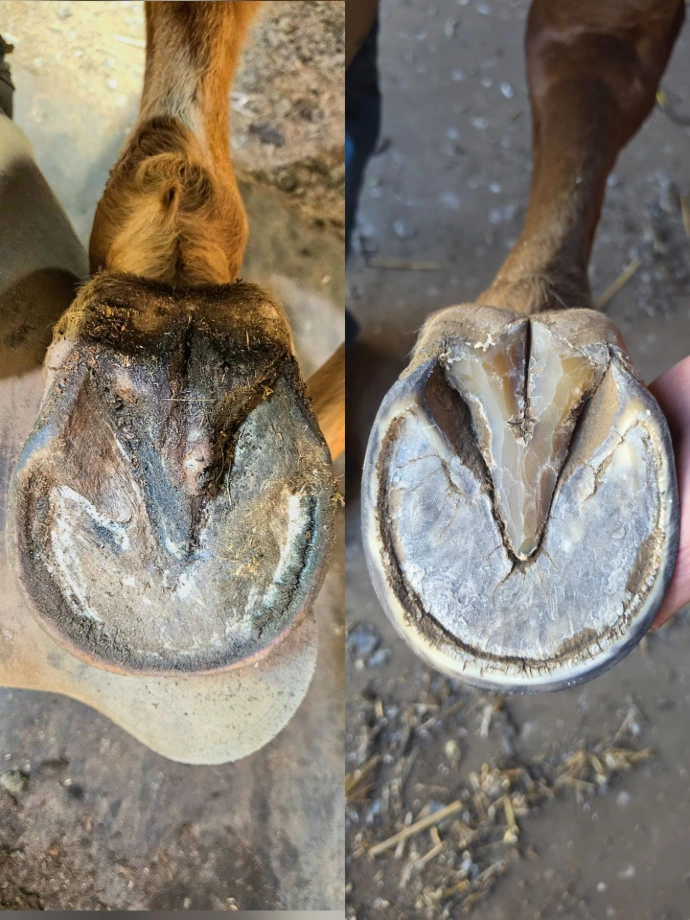
This horse didn't have the typical long and low look as pictured above under Low Heels , but the entire foot was run forward. This horse was flat trimmed before on a six week cycle, the bars, soles and frog were not being trimmed regularly, so they whole foot ran forward. This photo depicts a year and a half of progress. This was accomplished with regular four week trims, bringing the heels back as far as possible every trim, thrush management, and to some extent diet management.
White Line Disease
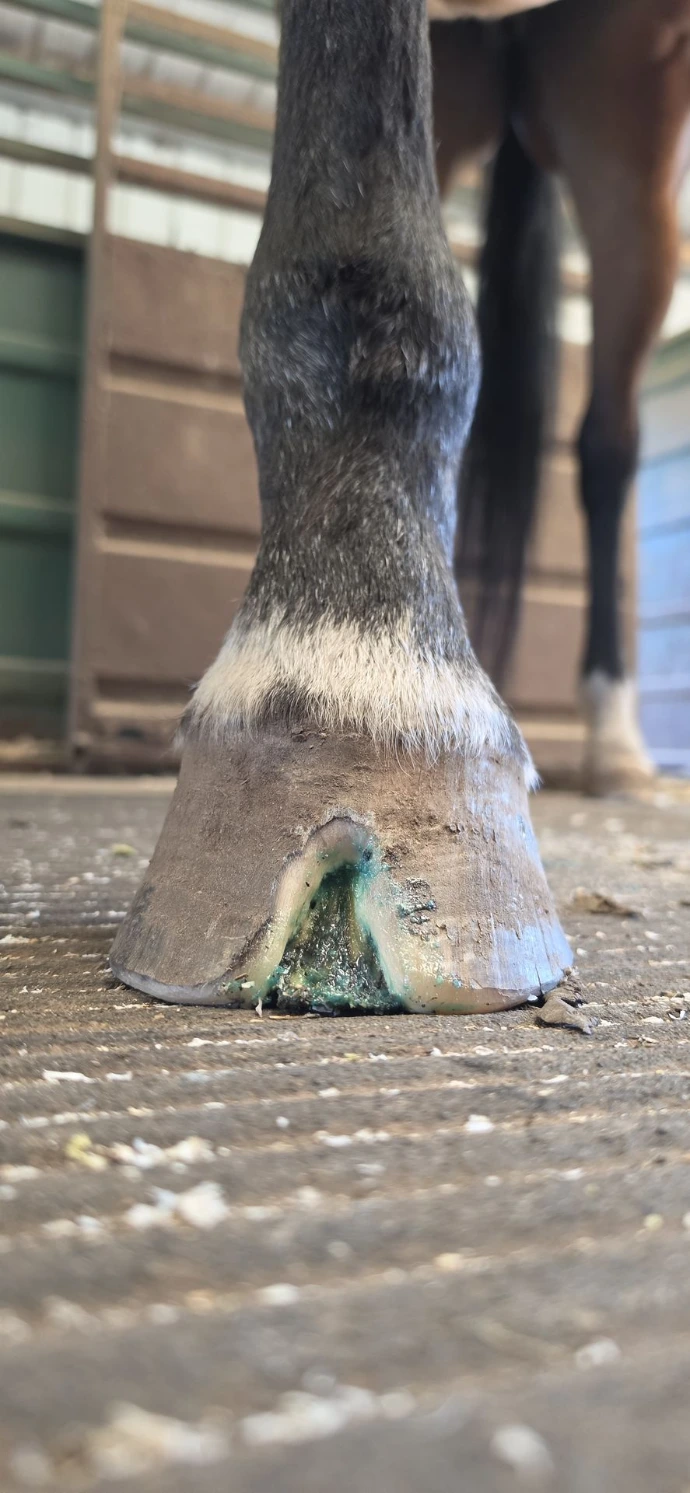
White line disease is a condition in which the white line of the hoof becomes infected with fungus and bacteria that thrives in environments without oxygen. This makes the white line a perfect place for this infection to live, and eat the white line from the bottom up. WLD can be caused by a variety of things, but it boils down to diet, management, and hoof care. In most cases, WLD can be treated with topical treatments and regular trims. In some cases though, resection or removal of outer wall in one area is necessary to allow oxygen into the area to make treatment more possible. Resections grow out like any other hoof distortion or deformity, but should only be done when necessary.
Founder & Laminitis
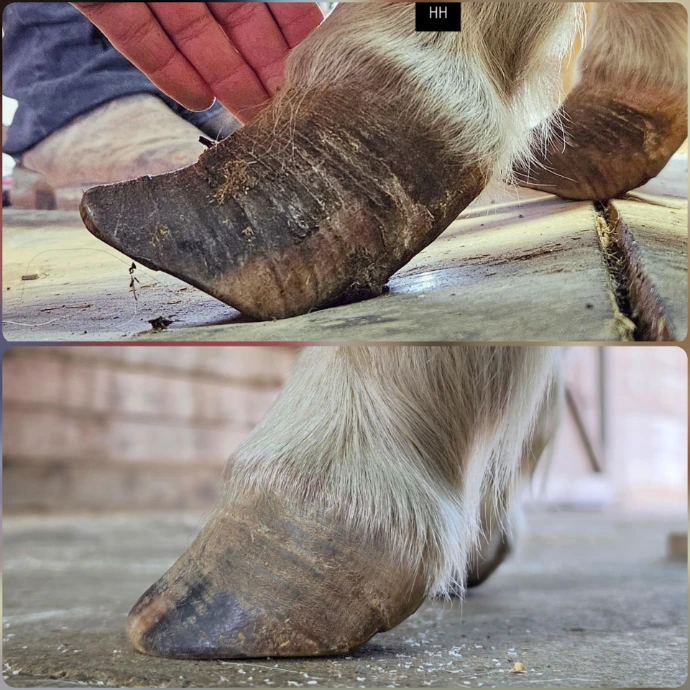
Laminitis is briefly defined as inflammation of the laminae, and founder occurs when the inflammation grows so severe that the pedal bone is allowed to sink or rotate within the capsule. These cases take extreme care and caution. Founder cannot be fixed or cured, the bone cannot be forced to return to the correct position. The hoof can only regrow healthier tissue from the inside out, and from top to bottom. The image here is of my dwarf mini that was gifted to me from a client who rescued her. This is about ten months of progress.